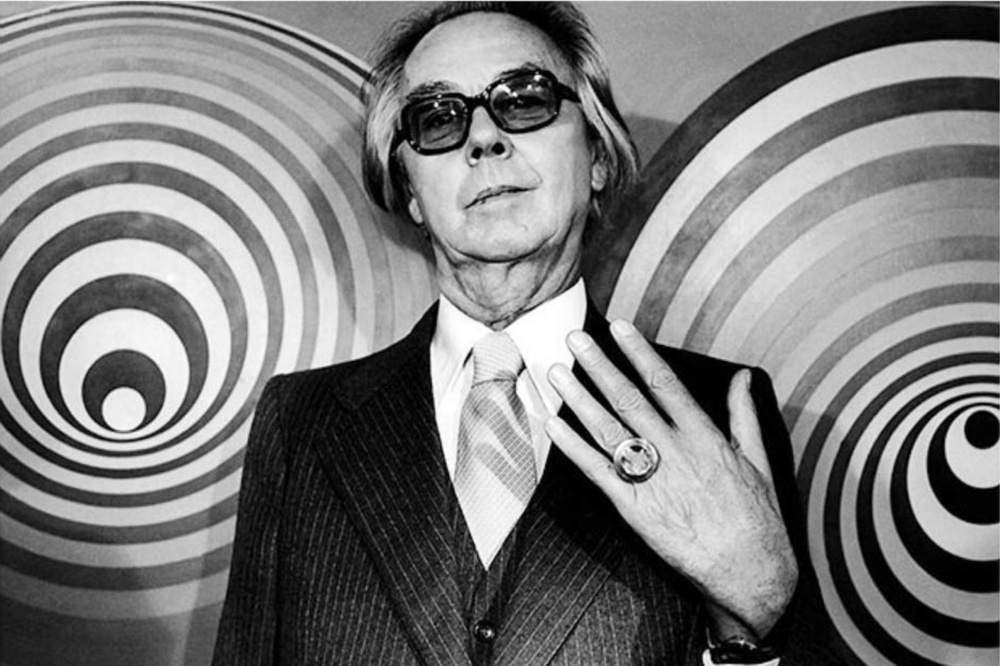
This year, we celebrate two special anniversaries: the 120th birthday of Victor Vasarely, the father of Op Art and kinetic art, born in Pécs, and the 50th anniversary of the Vasarely Museum in Pécs.
Vasarely did more than create artworks — he imagined a new world. In his 1970 book Plasti-Cité, he envisioned a “polychrome city” where art does not exist only within gallery walls but becomes part of everyday life: in streets, on buildings, and throughout public spaces. He believed that art belongs to everyone and created a universal visual language that continues to inspire people across generations and cultures.
At the 10th Zsolnay Light Festival, we pay tribute to Vasarely’s legacy.
- The artworks of the Zsolnay Light Art Video Mapping Competition,
- the installations of the Route of Light
- and the Perceptual Spaces – Hommage à Vasarely by Light exhibition on view all summer at the m21 Gallery
all reflect Vasarely’s vision: the intersection of light, geometry, optical illusion, and shared community experiences.
The 10th Zsolnay Light Festival will be more than a celebration of light — it will also be a tribute to a genius from Pécs who envisioned the future of visual culture decades ahead of his time.